Fechar
THE SHADOW CITY AND WHAT SHINES WITHIN IT
By Ana Miriam
MIRA Galerias | MIRA FORUM
Exposição
24.02—30.03.2024
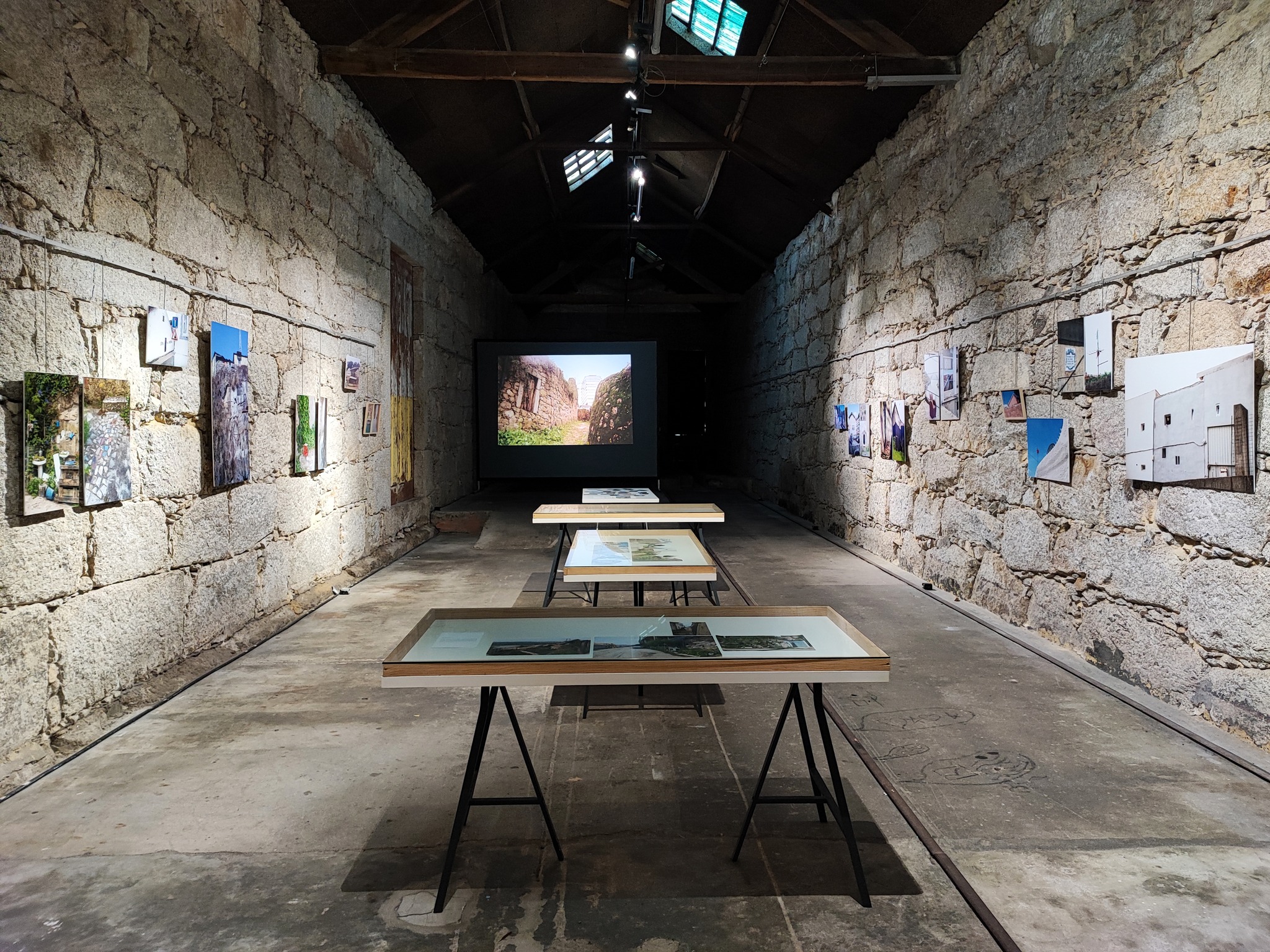
Ana Miriam Rebelo’s photographs invite us to recognise another Porto: a Porto often overshadowed by branding, experiential marketing, tourism, and an authenticity betrayed by the temptation to become a consumer product—or by the need to do so in order to survive.
Those who inhabit the daily life of Porto know this other Porto that Ana Miriam re-presents to us and invites us to recognise, legitimise and dignify. And surprisingly, she does so precisely by avoiding the pitfalls of fetishisation and hyper-visibility that are rampant in
neighbouring territories. This is not about romanticising what we glimpse in the twilight that permeates glittering urban policies: it is rather about raising our own standards regarding our perception of the city, dispelling the reductive, misguided expectations that have settled upon terms such as ‘creativity’ and ‘tradition’.
The images that make up this exhibition document places, but the author’s attentive gaze adds something essential to them: the evidence that these discreet ecosystems possess a kind of irreducible erudition, untranslatable into transactional languages – and consequently the awareness that the photographic act that alights upon them can only aspire to be a fleeting glance.
It is perhaps because of this irreducibility that the places documented and honoured here remain outside the mainstream iconographic lexicon that the city offers. These territories refuse to be tamed: they allow us only a glimpse, a vague idea of their deep-rooted, wrinkled, excavated, labyrinthine density. They do not strive for the limelight: they transcend it. Of their own volition, I sense, they wish to remain in the
twilight. And so much the better.
Heitor Alvelos | Porto 2024
CALL FOR PARTICIPATION
This exhibition is also a proposal for a relationship with the city, an invitation to appropriation, as an exercise in participation in the interpretation, representation and becoming of the city. Citizens are therefore invited to observe the city and to participate in this exhibition with visual records of their observations, reflections, encounters and dialogues.
In a profoundly transformed city, where can its inhabitants recognise meaning, sense and possibility? What imaginaries can be constructed, beyond the designs, representations and languages of the global market?
Participating images will be published online and projected in the gallery on the final day of the exhibition, when a closing event will take place. Contributions must be submitted by 23 March to: chamada.cidade@gmail.com
Acknowledgements
Fernanda Reis, José Reis, Américo Blanquet, Generosa Mendes, Lina Mesquita, Mr Ramiro, Mrs Mizé, Mr Berto, José Augusto, Regina Augusto, Maria da Glória Saldanha, Maria da Glória Oliveira, Mr Alves,
Agostinho Peixoto and many other people who gave me some of their time in brief conversations, whose names I did not record. Álvaro Domingues, Heitor Alvelos, José Carneiro. David Doutel. MIRA FORUM.
Support
Institute for Research in Media Art and Culture (UIDB/04057/2020)
Foundation for Science and Technology (PD/BD/150641/2020)
MIRA FORUM
Exhibition on view from 24 February to 30 March 2024
Photographs by Ana Miriam
Curated by José Carneiro
Text by Heitor Alvelos
Directed by Manuela Matos Monteiro and João Lafuente
Assistant: Luísa Rosas da Silva
Biographical Note
Ana Miriam is a photographer and researcher. Her work has developed across practice, teaching and research in the fields of the arts and visual culture, with a focus on photography and editorial projects. Her research interests and artistic practice centre on the dynamics of production, perception and representation of urban space—and in particular public space—at the intersection of its social, aesthetic and political dimensions.
Her visual and written work has been disseminated through presentations, publications and exhibitions in various contexts.
She is a fellow of the Foundation for Science and Technology and a member of the Institute for Research in Design, Media and Culture (ID+) and the Centre for Studies in Architecture and Urbanism (CEAU).